Siding Installation · Mission, TX

Siding Installation in Mission, TX: tailored to local homes

Siding installation in Mission, TX replaces the exterior cladding across a wall or building so the property gains a fresh, cohesive weather barrier and finished look. Mission Siding Solutions helps homeowners, landlords, and property managers plan new siding for aging exteriors, additions, remodels, and properties where repair is no longer enough. From material and profile selection to sequencing and site preparation, the scope, design choices, and next steps are reviewed against the specific conditions of your property. Serving Mission and the surrounding Rio Grande Valley, our team is designed to make each installation project easy to understand so you can move forward with confidence.

Get a Quote for Your Siding Project

Tell us about your siding project. We'll follow up with clear next steps.

Your information is used only to respond to your request.

Key Benefits

Key Benefits of Siding Installation in Mission

Homeowners and businesses consider siding installation when an exterior needs more than spot repairs can deliver. A full installation can renew the protective envelope, update the appearance, and bring the wall assembly up to a consistent standard across the property.

Renewed Weather Protection

New siding installs a fresh exterior envelope designed to shed rain and resist sun, wind, and impact. When the old cladding is failing, a full installation can address the weather-resistant layers behind it rather than just the surface.

Updated Curb Appeal

A complete siding installation gives a home or building a consistent, finished appearance across every wall. For owners refreshing an aging exterior or preparing a property for market, new cladding can modernize the look in one coordinated project.

Improved Moisture Management

Installation is the point where flashing, house wrap, and sealant details come together as a system. A properly sequenced install can help direct water away from the wall assembly, which matters in areas with heavy seasonal rain.

Material & Color Refresh

A full installation lets you choose a new material, profile, and color rather than matching weathered existing siding. That can be useful when the current cladding is faded, discontinued, or no longer suits the property.

Coordinated Exterior System

Because installation replaces cladding across an entire wall, trim, flashing, and transitions can be aligned as one system. This can reduce the patchwork look that builds up over years of piecemeal repairs.

Addressing Underlying Conditions

Removing old siding exposes the substrate and framing beneath, so hidden damage or deterioration can be identified and addressed. This can help the new cladding go over a sound base rather than covering up problems.

The Basics

What Siding Installation Involves

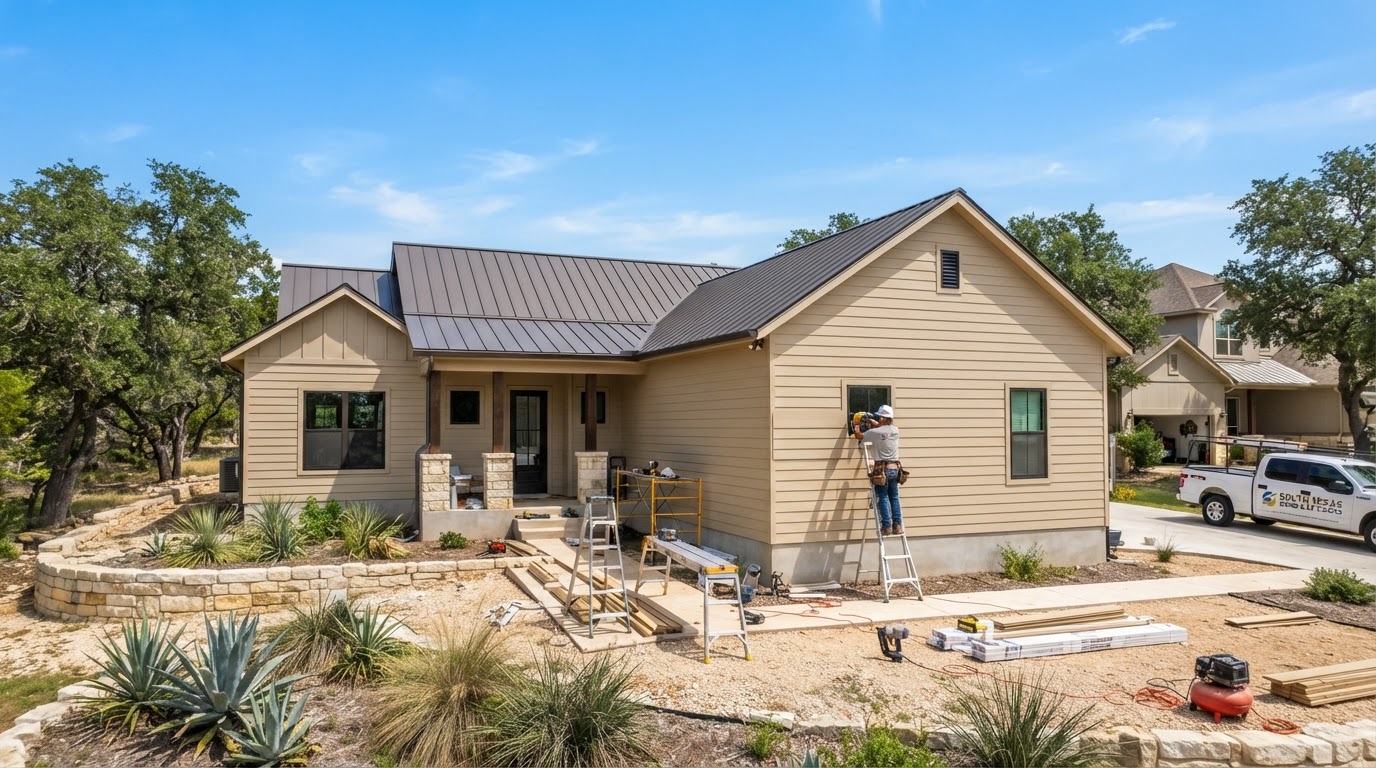
Siding installation is the process of putting up new exterior cladding across a wall or building, either as a replacement for failing siding or as part of new construction. It typically involves removing the old material where applicable, preparing the substrate, and installing the weather-resistant layers and finish cladding that form the exterior envelope.

Core steps include applying house wrap and flashing, fastening the siding panels or boards in the correct sequence, and finishing the trim around windows, doors, and corners. The goal is a wall assembly that sheds water, resists sun and wind, and presents a clean, uniform appearance.

Installation differs from siding repair, which fixes specific damaged areas while leaving the rest of the cladding in place. A full installation makes sense when the existing siding is broadly worn, discontinued, or when an owner wants a coordinated new look. In Mission, TX, where intense sun and seasonal rain stress exterior materials, a complete installation can help bring an aging exterior back to a consistent standard.

Typical Elements of a Siding Installation Project

  • Removal of existing cladding and inspection of the substrate
  • House wrap, flashing, and weather-resistant barrier detailing
  • New siding panels or boards installed across the wall
  • Trim, corners, and openings finished as a system
  • Sealant, joints, and transitions coordinated for water shedding
  • Site cleanup and review of the completed exterior
Suitability

Is Siding Installation Right for Your Property?

Whether siding installation is the right fit depends on the property type, the condition of the existing exterior, and your goals. The scenarios below can help you think through when a full installation may make sense — and when a different approach might be more appropriate.

When Siding Installation Often Makes Sense

A full installation is often the right call when most of the existing cladding is aged, faded, or failing across multiple walls. If repairs are becoming frequent or the siding product is discontinued, replacing it as a system can bring the exterior to a consistent standard.

Aging or Failing Cladding

Properties with siding near the end of its service life — brittle, cracked, or widespread moisture damage — may benefit from installation over continued repair. Removing the old material also exposes the substrate so hidden issues can be addressed.

Remodels & Additions

When a home is being expanded or an exterior reconfigured, new siding ties the old and new sections together. Installation can help the addition blend with the existing structure and bring the whole wall assembly up to one standard.

Curb Appeal & Resale Refresh

Owners updating a property's look or preparing for sale may choose installation for a clean, uniform appearance. A new material, profile, or color can modernize an exterior in a single coordinated project.

Situations Where Installation May Not Be Ideal

If the damage is limited to a few panels and the rest of the cladding is sound, a targeted repair may be more appropriate than a full installation. Installation is a larger scope project, so it's best weighed against the actual condition of the exterior.

Historic or HOA-Restricted Properties

Some neighborhoods or associations limit material, color, or profile changes, which can affect what an installation involves. Requirements may vary, so it's worth reviewing applicable guidelines for the specific property before planning a full replacement.

New Construction

For newly built homes and commercial structures, siding installation is part of finishing the exterior envelope. The approach depends on the building design, the chosen material, and the sequencing with other exterior trades.

Planning & Local

Planning Siding Installation in Mission

A siding installation project usually starts with the condition of the existing exterior and the goals for the property. The current material, the substrate behind it, and whether the project is a full replacement or part of new construction all shape the scope. Material and profile preferences, finish color, and how the new cladding ties into trim, flashing, and openings factor into the plan as well.

Site conditions matter too. Height, terrain, landscaping, and proximity to walkways or neighboring properties affect how the work area is set up and protected. In Mission, TX, intense sun and heat can fade and embrittle exterior materials over time, while seasonal heavy rain tests how well flashing, house wrap, and joints shed water — so material choice and detailing are often weighed against local climate exposure.

When applicable, local permits, inspections, or HOA and municipal guidelines may affect how and when installation proceeds. These requirements can vary by location and project type, so they're best reviewed individually for your property and confirmed with the appropriate local authority. Mission Siding Solutions also serves nearby communities including McAllen, TX, Pharr, TX, Edinburg, TX, Palmview, TX, Alton, TX, San Juan, TX, Alamo, TX, Weslaco, TX.
Important Planning Questions

  • What is the condition of the existing siding and the substrate behind it?
  • Is the goal a full replacement, or would targeted repair be more appropriate?
  • Which material, profile, and color suit the property and local conditions?
  • How will the crew access the walls — height, terrain, or landscaping to protect?
  • Are there HOA, municipal, or permit considerations that may apply to the work?
  • What is the desired timeline, and how does weather factor into scheduling?
  • Are there moisture, drainage, or ventilation issues to address during installation?

Also Serving

  • McAllen, TX
  • Pharr, TX
  • Edinburg, TX
  • Palmview, TX
  • Alton, TX
  • San Juan, TX
  • Alamo, TX
  • Weslaco, TX
Our Approach

How We Approach Siding Installation

We start with a conversation about what you'd like the installation to accomplish and what you're seeing on the exterior. That first discussion helps us understand the property, your goals for material and appearance, and any timing or access considerations that should shape the plan.

From there, the existing conditions are reviewed — the current siding, the substrate behind it, and any signs of moisture or damage that could affect the installation. Noting access, height, and surrounding structures helps define how the work area will be set up and protected during the project.

Based on that review, scope, priorities, and the sequence of work are outlined so the plan is clear before anything begins. Materials, finish direction, and how trim, flashing, and openings come together as a system are coordinated ahead of execution. When required, permits or local approvals are addressed depending on the project and jurisdiction.

During the work, the site is prepared with attention to access and protection of surrounding surfaces, and scheduling around weather, occupancy, or tenant activity is factored in where relevant. Once the installation is complete, we review the finished exterior with you and walk through any maintenance or follow-up considerations so you leave with a clear picture of what was done.

Options & Methods

Common Siding Installation Configurations and Methods

Full Wall Replacement

Full wall replacement removes the existing cladding across an entire wall or building and installs new siding in its place. It's often appropriate when the old material is broadly worn, discontinued, or when an owner wants a coordinated new look. The decision depends on the condition of the substrate, the desired material, and how much of the exterior needs to be brought up to a consistent standard.

Material Selection

Material selection covers the type of cladding installed — such as vinyl, fiber cement, engineered wood, or metal panels. Each behaves differently under South Texas sun and rain, and the right choice often depends on durability goals, maintenance preferences, and the property's architecture. What's suitable varies by project and the conditions the wall will face.

Profile & Orientation

Profile and orientation refer to the shape of the siding — horizontal lap, vertical board-and-batten, panels, or shakes — and the direction it runs. The profile influences both appearance and how water sheds off the wall, so it's chosen with the building design and exposure in mind. Some profiles suit certain architectural styles better than others.

Flashing & Weather-Resistant Barrier

Flashing and the weather-resistant barrier are the layers behind the siding that manage water and air. Proper detailing at windows, doors, corners, and roof transitions helps direct moisture away from the wall assembly. How this is configured depends on the wall construction, the cladding type, and local climate exposure.

Trim, Corners & Finish Details

Trim, corners, and finish details tie the installation together around openings and building edges. Coordinating these as part of the installation — rather than as an afterthought — helps the exterior read as one system and closes gaps where moisture could enter. The approach depends on the trim material, the siding profile, and how the pieces intersect.

FAQ

Frequently Asked Questions About Siding Installation in Mission

What's the difference between a full siding installation and a partial replacement?

+

A full installation replaces the cladding across an entire wall or building, while a partial replacement addresses one section or elevation. Full replacement is often chosen when the existing siding is broadly aged or when a coordinated new look is the goal. The right scope depends on the condition of each wall and what you want the finished exterior to achieve.

Will my old siding be removed before the new siding goes up?

+

In most full replacements the existing cladding is taken off so the substrate can be inspected and the weather-resistant barrier installed properly. Some installations can go over sound existing siding when conditions allow, but whether that's appropriate depends on the property and is reviewed during planning. The approach affects how the wall is prepared and how long the work takes.

What happens to the weather barrier and flashing during installation?

+

A siding installation typically includes a weather-resistant layer behind the cladding, along with flashing around windows, doors, and transitions to direct water away from the wall. These components are part of the system that helps the exterior shed moisture. How they're applied depends on the material and the building's construction.

How do I choose a siding material for a new installation?

+

Material choice depends on the look you want, the climate exposure, the building's style, and how much upkeep you're open to over time. Common options include fiber cement, vinyl, engineered wood, and metal, each with different profiles and finishes. The right fit is usually reviewed against the property and your goals during planning.

Can new siding be installed over my existing siding?

+

Installing over existing siding can be possible when the current cladding is flat, sound, and free of moisture damage, but it isn't appropriate for every property. Going over old siding can trap moisture or add weight the wall wasn't designed for. Whether it's an option depends on the condition of the existing material and is reviewed during planning.

How does site access affect a siding installation project?

+

Access around the building, the height of the walls, landscaping near the exterior, and whether scaffolding or lifts are needed all influence how the work is sequenced. Tight access or multi-story walls can extend the schedule and affect preparation. Site conditions are reviewed as part of planning the installation.

What should I do to prepare my home before installation begins?

+

Clearing furniture and breakable items away from exterior walls, trimming back landscaping that touches the siding, and noting any interior walls that share the work area can help the project go smoothly. Removing wall-hangings on shared interior walls is also worth considering, since installation can cause vibration. Preparation details are covered before work starts.

Do I need a permit for siding installation in Mission, TX?

+

Permit requirements can vary by project scope and local jurisdiction. A full siding replacement or structural changes may require a permit and inspection, while some projects might not. Permit needs are best reviewed for your specific property and confirmed with the appropriate local authority.

How does the Rio Grande Valley climate influence siding installation choices?

+

Intense sun, high heat, and humidity common to the area can affect how materials perform and fade over time, which is why material and finish selection is often weighed against local exposure. Proper flashing and ventilation behind the cladding also matter in this climate. Local conditions are one factor reviewed during planning.

How do I get started with a siding installation?

+

Start by reaching out through the contact form or by phone with a few details about your property and what you'd like the installation to accomplish. From there, an initial conversation helps define the scope, material options, and next steps.

Which nearby communities does Mission Siding Solutions serve?

+

We serve Mission and nearby Rio Grande Valley communities including McAllen, Pharr, Edinburg, Palmview, Alton, San Juan, Alamo, and Weslaco. Reach out to confirm service for your specific location.

Let's Talk

Discuss Your Siding Installation Project With Mission Siding Solutions

Share your project goals, property details, and any questions through the contact form. Starting with a clear conversation helps us understand what you'd like the installation to accomplish and what conditions the exterior currently presents.

From there, organized next steps make it easier to review scope, materials, and scheduling so you can move forward with confidence. Whether it's a full-home replacement or a single-wall installation, we're glad to talk through the details.

  • Mon–Fri 7:30am–5:30pm · Sat 8:00am–12:00pm

Get a Quote for Your Siding Project

Tell us about your siding project. We'll follow up with clear next steps.

Your information is used only to respond to your request.

(956) 555-0142