Mission, TX · Service Area

Siding Repair in Mission, TX: Homes Built for Valley Living

Siding repair in Mission, TX responds to the way homes and small businesses across this fast-growing Rio Grande Valley community actually age under the sun. Mission blends established post-war subdivisions, newer master-planned neighborhoods, and pockets of rural and agricultural property along its outer edges—each of which asks different things of an exterior cladding system. Decades of intense South Texas heat, occasional Gulf-driven storms, and the expansion-and-contraction cycles of slab-on-grade construction can loosen panels, crack trim, and open seams where water finds its way in.Mission Siding Solutions helps local owners, landlords, and property managers address that wear through organized, clearly communicated repair work tailored to the specific wall, material, and exposure of the building. When a full replacement better fits the condition of the exterior, residential siding services and custom siding designs can also be discussed alongside the repair scope. Every project starts with a review of the actual property, so the materials, scope, and next steps match what the building needs rather than a one-size-fits-all approach.

Get a Quote for Your Siding Project

Tell us about your siding project. We'll follow up with clear next steps.

Your information is used only to respond to your request.

Local Properties

Siding Repair for Mission Properties

Mission's built environment runs the gamut from mid-century ranch homes in established neighborhoods to newer stucco-and-fiber-cement construction in expanding subdivisions, with smaller commercial strips along the main corridors. Siding repair here often means meeting a building wherever it is in its life cycle—fixing isolated damage on an otherwise sound exterior, or addressing broader wear on an older cladding system that has taken years of Valley sun.

Because many homes sit on slab foundations in clay-rich soil, subtle movement over time can stress corners, openings, and joints where trim and flashing meet. Repairs commonly center on the areas that show that stress first: cracked or separating trim, loose panels, and stained sections that hint at moisture behind the wall. How each repair is scoped depends on the material, the exposure, and how much of the exterior is actually affected.

Local requirements—such as HOA exterior standards or municipal review processes—can also shape what a repair involves, particularly in planned communities. Those requirements may vary by neighborhood and should be confirmed for the specific property before work moves forward.
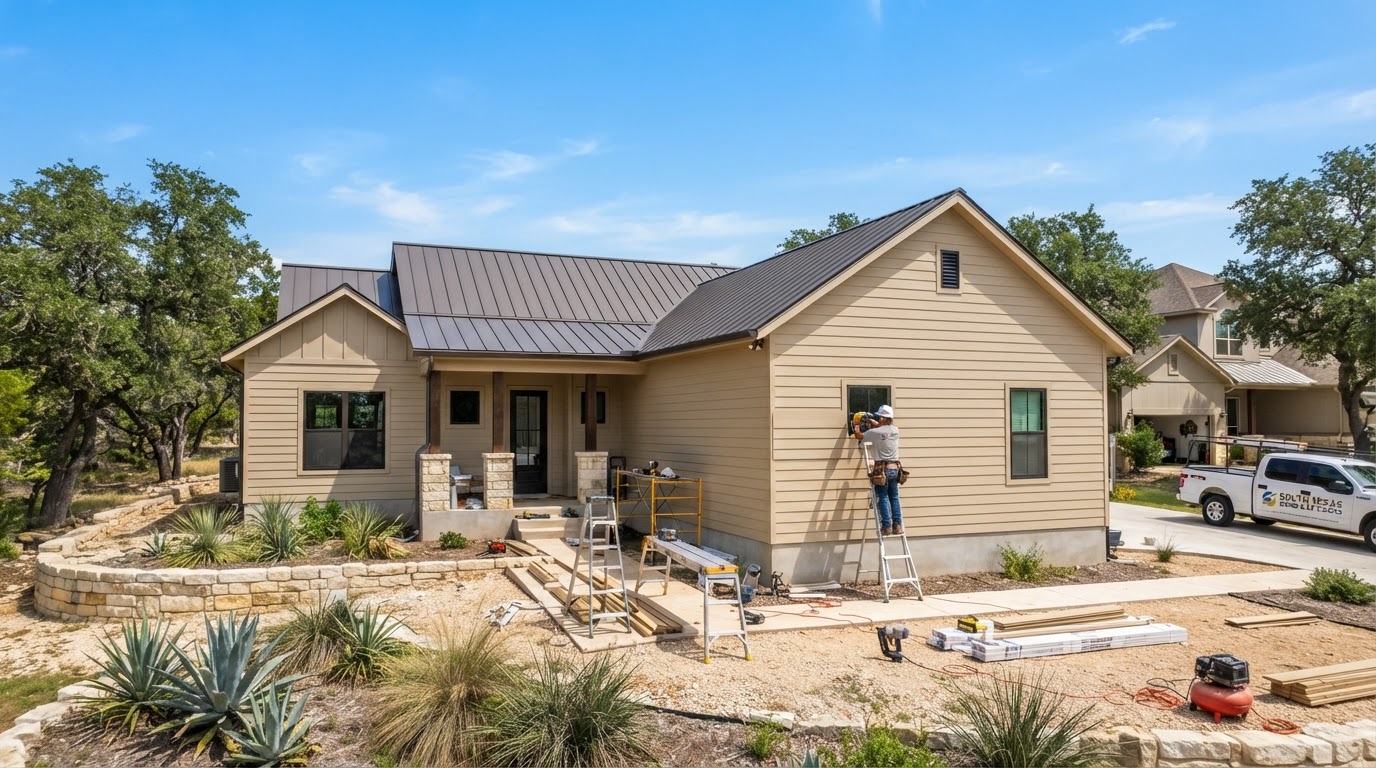
What Local Property Owners Often Consider

  • Matching new material to existing cladding on established subdivision homes
  • Trim and seam checks where slab movement may have stressed wall joints
  • Sun-facing elevations that fade and embrittle faster than shaded walls
  • Weather-barrier and flashing review behind visibly damaged or stained areas
  • Rural and outskirt properties with longer exposures to wind and dust
  • Neighborhood or HOA exterior guidelines that can affect material and color choices
  • Phasing repair work around occupied homes, rentals, or small-business operations
Featured Applications

How Siding Repair Supports Mission Property Goals

Sun-Baked South-Facing Wall Repair

On Mission homes, the south- and west-facing walls bear the brunt of direct Valley sun, which can fade colors, embrittle vinyl, and dry out caulked joints faster than shaded sides. A repair here often focuses on those heavily exposed elevations—replacing the most heat-fatigued panels, resealing joints, and reviewing trim that has cracked from thermal cycling. The scope typically depends on how far the wear has progressed and whether the substrate behind the cladding is still sound.

Trim & Corner Repair on Slab-Foundation Homes

Many Mission houses sit on concrete slabs over clay soils that shift subtly with wet and dry seasons, which can transfer stress into corners, door openings, and fascia trim. Repairs in this scenario commonly address separating or cracked trim, corner boards, and the joints where flashing meets openings. The goal is to reseal those movement points so the wall can flex seasonally without reopening the same gaps.

Storm-Seam and Flashing Touch-Ups

Gulf-influenced storms can drive wind and heavy rain against exterior walls, testing the seams, flashing, and caulk lines that keep water out. After a weather event, a targeted repair may review the areas most likely to leak—around windows, rooflines, and wall transitions—and reseal or replace flashing where it has lifted. Whether a full panel replacement is needed often depends on whether the material itself was damaged or only the seal was compromised.

Exterior Refresh for Re-Leasing or Resale

For landlords and owners preparing a Mission rental or resale property, siding repair can be part of a broader exterior refresh that addresses the most visible damage before the building goes back on the market. This may combine panel replacement, trim repair, and a review of the weather barrier on the most exposed walls. Custom siding designs can also be discussed when the goal is a more coordinated new look rather than a patch.

Rural Outskirt Property Maintenance

On the agricultural and rural edges of Mission, properties often face longer, unsheltered exposures to wind, dust, and sun with little neighbor shielding. Repairs on these buildings tend to focus on impact damage, dust-abraded finishes, and weather-barrier integrity over long wall runs. The approach usually balances durable material choices with how the property is actually used day to day.

Design & Materials

Siding Repair Considerations for Mission's Mixed Property Stock

Because Mission spans several decades of construction, a repair is rarely one-size-fits all. The decisions that shape a project usually start with how the existing material has aged, how much of the wall is actually affected, and how the repaired area will read against the rest of the exterior.

Heat, moisture, and any neighborhood standards in play all feed into those choices. The considerations below outline the kinds of decisions that commonly come up for Mission properties, though every building is reviewed individually.

Material Matching on Mixed-Age Exteriors

Mission neighborhoods often mix older and newer construction, so a repair may need to match new material to cladding that has already weathered. Color, profile, and texture availability all influence how seamlessly a replaced panel blends, and fading on the original wall can make an exact match difficult. Where a close match isn't available, a transition trim or a larger section replacement may be considered.

  • Profile and thickness of the existing siding
  • Color fade versus original manufacturer sample
  • Whether a transition trim improves the blend

Heat and UV Exposure Decisions

Intense South Texas sun shortens the service life of some finishes and can make darker colors absorb more heat against the wall. On repaired elevations, lighter or more UV-stable finishes may be discussed where the wall faces full sun, while shaded sides may allow more flexibility. The right choice depends on orientation, existing color, and long-term maintenance preference.

  • Wall orientation and daily sun exposure
  • Heat absorption of darker versus lighter finishes
  • Expected maintenance of the repaired area over time

Moisture Barrier and Flashing Integrity

When damaged siding is opened up, the weather-resistant barrier and flashing behind it can be inspected for the moisture intrusion that often accompanies visible stains or soft spots. In Mission's rain and humidity, resealing or replacing those hidden layers can matter as much as the visible cladding. How much of the barrier is addressed depends on what the inspection finds.

  • Staining or soft spots that hint at moisture behind the wall
  • Condition of existing house wrap or felt
  • Flashing condition around openings and transitions

Neighborhood and HOA Exterior Standards

Planned communities in and around Mission may have exterior standards that guide material, color, or the scope of visible changes to a home. These guidelines can affect what a repair can look like and how it should match the surrounding properties. Applicable requirements can vary by neighborhood and are best confirmed for the specific property before work begins.

  • Whether the property sits in an HOA-managed community
  • Approved material or color palettes, where applicable
  • Any review or notification process before exterior changes
Planning

Planning a Siding Repair Project in Mission, TX

A siding repair in Mission usually starts with understanding what the building needs and how the work fits into the local environment. Property age, sun exposure, and any neighborhood standards all play into how the scope is defined before any material is ordered or removed.

Thinking through the project in stages can help clarify the goal, the conditions, and the next steps—so the repair addresses the actual cause of the wear rather than only the visible symptom. Where permits, reviews, or inspections apply, they're considered as conditional project steps rather than assumptions.

  1. 1

    Define the Project Goal

    Start by identifying what prompted the repair—visible damage, a moisture concern, or preparation for resale or re-leasing. Clarifying the goal helps shape whether the project stays targeted or expands to a broader refresh.

  2. 2

    Review Existing Conditions

    The affected walls, trim, and flashing are inspected to understand the extent of the wear and what lies behind the cladding. This step helps determine whether a panel-level repair is sufficient or whether the weather barrier needs attention.

  3. 3

    Consider Materials and Matching

    Material, profile, and finish options are weighed against the existing siding and the wall's sun exposure. Where an exact match isn't available, transition details or a larger section may be discussed.

  4. 4

    Confirm Applicable Requirements

    Any HOA exterior standards or municipal review processes that apply to the property are considered, where applicable. Requirements can vary by neighborhood and should be confirmed for the specific location before work proceeds.

  5. 5

    Coordinate Work and Access

    The repair is sequenced around how the home or building is used—occupied residences, rentals, or small businesses—so access and disruption are planned in advance. Preparation covers the work area, materials, and any follow-up needed.

  6. 6

    Review the Completed Repair

    Once work is complete, the repaired area is reviewed against the surrounding exterior for fit and finish. Next steps, such as routine maintenance or monitoring of related areas, can be discussed before the project closes.

Service Area

Siding Repair in Mission, TX

Mission Siding Solutions serves customers in Mission, TX and the surrounding Rio Grande Valley area. The map below shows the general location of Mission for reference.

Coverage

Serving Mission, TX and Nearby Communities

Mission is the primary focus for Mission Siding Solutions, and we also serve the neighboring communities across the Rio Grande Valley that are already established on this site. Whether your property sits in a residential subdivision or a commercial corridor, the same organized, clearly communicated approach applies. For the full coverage list, visit the Service Areas dropdown in the navigation.

Also Serving

  • McAllen, TX
  • Pharr, TX
  • Edinburg, TX
  • Palmview, TX
  • Alton, TX
  • San Juan, TX
  • Alamo, TX
  • Weslaco, TX
FAQ

Frequently Asked Questions About Siding Repair in Mission, TX

Why does siding on Mission homes often need repair on the south and west walls?

South- and west-facing walls in Mission take the most direct South Texas sun, which fades finishes, dries out caulk, and embrittles some materials faster than shaded sides. Those elevations commonly show the first signs of cracking, loose panels, and seam separation. A repair focused on the most exposed walls can help the exterior keep performing while shaded sides may need less attention.

How do Mission's slab-on-grade homes affect siding repair planning?

Many Mission houses are built on concrete slabs over clay-rich soil that shifts subtly between wet and dry seasons, which can stress corners, openings, and trim joints. Repairs often address the trim and flashing at those movement points so seasonal flexing doesn't reopen the same gaps. The approach depends on how much movement the specific building shows.

Can a repair match new siding to an older, already-faded Mission exterior?

Matching new material to weathered cladding can be difficult because the original siding may have faded from its factory color. Profile, thickness, and color are weighed against the existing wall, and where a close match isn't available a transition trim or a larger section may be considered. How well it blends depends on the material and how long the surrounding siding has been exposed.

Should the weather barrier behind the siding be checked during a Mission repair?

When damaged siding is opened up, the house wrap, felt, and flashing behind it can be inspected for the moisture intrusion that often accompanies visible stains or soft spots. In Mission's humidity and seasonal rain, those hidden layers can matter as much as the visible cladding. Whether they're addressed depends on what the inspection finds.

Do HOA standards in Mission neighborhoods affect siding repair choices?

Planned communities in and around Mission may have exterior standards that guide material, color, or the scope of visible changes to a home. Those guidelines can influence what a repair can look like and how it should match neighboring properties. Applicable requirements vary by neighborhood and should be confirmed for the specific property before work begins.

Is siding repair a good option when preparing a Mission rental or resale property?

Repair can be part of an exterior refresh that addresses the most visible damage before a property goes back on the market, often combining panel replacement, trim repair, and a weather-barrier review. When a more coordinated new look is the goal, custom siding designs can be discussed alongside the repair scope. What fits depends on the building's condition and the owner's goal.

How are siding repairs handled on rural or agricultural properties around Mission?

Properties on Mission's outlying edges often face longer, unsheltered exposures to wind, dust, and sun with little neighbor shielding. Repairs there tend to focus on impact damage, dust-abraded finishes, and weather-barrier integrity over long wall runs. The approach usually balances durable material choices with how the property is used day to day.

Are permits or inspections sometimes required for siding repair in Mission, TX?

Permit or inspection requirements can vary by project scope and local jurisdiction, and not every targeted repair triggers one. Work involving structural changes or a broad re-cladding may be more likely to require a permit, while a small panel or trim repair often may not. Any applicable requirements are best confirmed with the appropriate local authority for the specific property.

What should I prepare before starting a siding repair in Mission?

It helps to note which walls and features are affected, how long the issue has been visible, and whether the property has any HOA or exterior review process. Photos of the damage and context about sun exposure or recent storms can also clarify the scope. This information supports a clearer review of the property's actual conditions.

Which nearby communities does Mission Siding Solutions serve?

Beyond Mission, the service area already established on this site includes McAllen, Pharr, Edinburg, Palmview, Alton, San Juan, Alamo, and Weslaco. The same organized, clearly communicated approach applies across these Rio Grande Valley communities. You can confirm coverage for your specific location through the Service Areas dropdown.

How do I get started with siding repair in Mission, TX?

The simplest first step is to share your property details and what you're seeing through the contact form on this page. From there, the affected areas and next steps can be reviewed for your specific building. Reach out whenever you're ready to discuss your project goals.

Get Started

Discuss Your Mission, TX Siding Repair Project With Mission Siding Solutions

Whether your Mission home is showing sun-faded panels on its south wall, trim cracks from seasonal soil movement, or storm-related seam and flashing issues, the best place to start is a clear conversation about what you're seeing. Share your property details, the affected walls, and your goals through the contact form on this page.

From there, the scope, materials, and next steps can be reviewed against the actual conditions of your building rather than a generic template. If a full replacement or a custom siding look better fits the situation, that can be discussed alongside the repair scope so you have a complete picture before moving forward.

Use the form to tell us about your project, or reach out directly using the details below. We're positioned to review siding repair work throughout Mission and the surrounding Rio Grande Valley.

(956) 555-0142